 On
On


Yes. Insurance for a single day is available.

Rental Car Insurance New Zealand: Daily NZ Car Hire Excess Insurance from NZ$ 10.85
When in Rome, do as the Romans do. Similarly, when in New Zealand, think about car rental insurance. While you may be excited about visiting iconic landmarks or embarking on a road trip through the island, the last thing you want to worry about is unexpected repair costs in case of an accident. Fortunately, rental car insurance can be your financial safety net.
See How Much You Can Save on Your Rental Car Insurance NZ
Get StartedRental Car Insurance New Zealand Coverage Chart
| Warranty | What does it cover? | How much does it cover? |
|---|---|---|
| Damage due to collision or theft | Reimbursement of the deductible applied by the rental company as a result of accidental damage caused to the vehicle, including tires, windshield, underbody and other parts | $ 2,500 - $ 4,500 |
| Improper Fuel Use Charges | Tank emptying costs and vehicle towing, when the wrong fuel is refueled into the vehicle by mistake. | $ 500 |
| Loss or theft of keys | In the replacement of lost or stolen keys, including lock and locksmith costs. | $ 500 |
| Towing charges | Covers the tow truck of the rented car in the event of a breakdown or accident. | $ 500 |
| Vehicle return charges | If as a result of an accident or illness with hospitalization you cannot return the vehicle. | $ 250 |
| Personnal belongings | In case your baggage, personal belongings or valuables are taken, permanently lost or unintentionally damaged during your trip | $ 500 |
| Hotel expensses | If You are unable to use your rental vehicle as a result of it being stolen or damaged | $ 150 |
Vehicle rental excess insurance

What is insured?
- Excess reimbursement up to US$ 4,500
- Damage Waiver (LDW) up to US$ 4,500
- Towing charges up to US$ 500
- Improper fuel charges up to US$ 500
- Loss or theft of keys up to US$ 500
- Vehicle return charges up to US$ 250
- Personnal belongings up to US$ 500
- Hotel expenses up to US$ 150

What is not covered?
- Damage to the vehicle or property of a third party
- Damage caused by a person not authorized to drive the rented vehicle
- Mechanical failure of the rented vehicle
- Loss or damage to the vehicle’s interior that is not related to a collision.
- Parking tickets or fines, traffic violations and such
- Any loss that occurs outside the validity of the insurance
- Any rental contract of more than 45 days

Is the coverage subject to any type of restrictions?
- Any claim resulting from a direct breach of any of the terms and conditions of your rental agreement
- Any person under 21 or above 84 years of age
- Rentals that begin or end outside the insurance period, as indicated on the insurance certificate
- The policyholder must be designated as the main driver in the rental agreement
- The maximum amount that can be claimed for a single loss is US$ 4,500
- Damage to Recreational vehicles (RVs) / Motorhomes / Campervans (unless you have purchased a specific cover)
- Damage to vehicles provided by a peer-to-peer vehicle rental service platform or a subscription vehicle service is excluded (unless purchased specific coverage)..

Where do I have coverage?
- Anywhere in the world except trips in, to or through Afghanistan, Cuba, Congo, Iran, Iraq, Ivory Coast, Liberia, North Korea, Myanmar, Russia, Sudan, Syria, Ukraine and Zimbabwe

What are my obligations?
- When applying for your policy, you must exercise reasonable care to honestly and carefully answer any questions asked.
- You must take all reasonable steps to avoid or reduce any loss (for example, you must report accidents or other damage to your rental company nd to CarInsuRent as soon as reasonably possible).
- If you make a claim, you must provide the documents and other evidence that claims handlers need to process your claim.
- You must repay any sums to which you are not entitled (for example, if we pay your claim for an accident which is later compensated by a third party).
- You must not violate the terms of the rental agreement.

When and how do I make the payment?
- The premium must be paid in full before the policy start date. Payment can be made by credit or debit card or PayPal through our website

What is the start and end date of coverage?
- As set out in the insurance certificate, as agreed in the application process, your policy will cover you from the start date and time of your booking to the end date and time of your booking.

How do I cancel the contract?
- You can cancel your policy before the start date or within 14 days from your purchase through our customer service team.
Fabulous service. There was some damage to the car, which the rental company claimed was my fault, which I totally refuted. Following a few e-mails between them and myself, they decided to charge my credit card for the damage, and I had no option but to pay. I opened a claim at CarInsuRent, and within a few days they reimbursed me the whole amount.
The Importance of Car Rental Insurance in New Zealand
Renting a car in New Zealand offers the freedom to explore the country’s diverse landscapes and attractions at your own pace. However, before you hit the open road, it’s essential to understand the ins and outs of car rental insurance in New Zealand. In this comprehensive guide, we’ll walk you through the crucial aspects of car rental insurance. Down Under to ensure a hassle-free and cost-effective experience.
The Basics: Collision Damage Waiver (CDW)
In New Zealand, rental car insurance typically includes what’s known as Collision Damage Waiver (CDW). CDW, also referred to as Loss Damage Waiver (LDW) when theft protection is included, is automatically included when you rent a car online. Importantly, it won’t be offered at the rental desk. CDW covers damages to the rental vehicle, but there’s a catch: it comes with a high excess fee.
- The excess payable in case of damage ranges from NZ $2,900 to NZ $6,900.
- Rental companies often have exclusions, which means certain types of damage aren’t covered. These may include windscreens, cracks, chips, tire punctures, replacements, and damages to headlights and the underbody.
- On top of the excess fee, you might face additional costs, such as administration, towing, and loss of use fees.
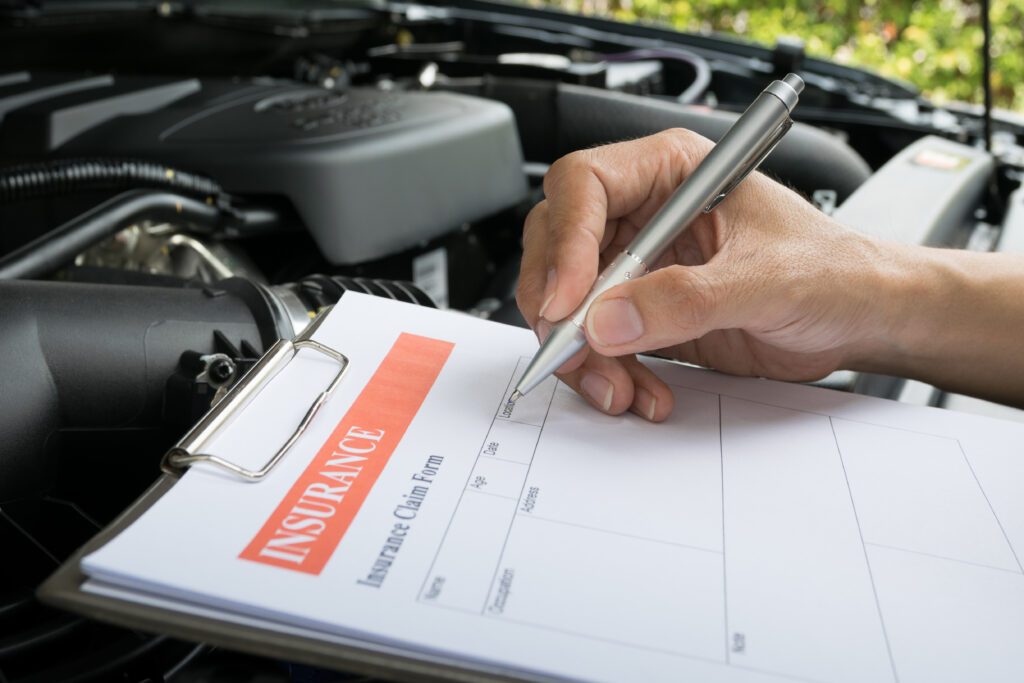
Inspecting damage car and filling in accident report
Excess Waiver: Reducing Your Liability
To mitigate the high excess fee associated with CDW, rental companies offer Excess Waivers. These waivers are sold at the rental counter, and they aim to reduce your standard excess to AU$0.00. However, they come at a price.
- Excess waivers cost between NZ$ 33.00 and NZ$45.00 per day.
- Unfortunately, these waivers usually do not cover expenses related to tires, windscreens, roadside assistance, or key loss.
Pro Tip: Opting for CarInsuRent car hire excess insurance can be a cost-effective alternative. It’s 50% cheaper than rental company excess waivers and offers broader coverage, including tires, windscreens, and key loss.
Insurance Options Comparison: CarInsuRent vs. Cost at Counter
We’ve built a global business around saving customers more than 70% versus equivalent coverage at the rental desk. We aim to pay claims within 5 business days, so you can save your money for boogie board down sand dunes at 90-Mile Beach or visit a volcanic island.
| Rental Company | Mandatory Insurance in Australia – Collision Damage Waiver (CDW) + Theft Protection (TP) | Avg. Super Collision Damage Waiver Cost at Counter* | Avg. Insurance Deductible at Counter* | Avg. Cost for Zero-Excess Insurance with CarInsuRent | Cost of Deductible with Zero-Excess from CarInsuRent |
| Avis | Included at the rental price | NZ$ 36.47 | NZ$ 4,025 | US$ 6.49 per day or US$ 94.90 for annual coverage | $0 USD |
| Budget | Included at the rental price | NZ$ 36.47 | NZ$ 4,025 | US$ 6.49 per day or US$ 94.90 for annual coverage | $0 USD |
| Dollar | Included at the rental price | NZ$ 45.00 | NZ$ 5,900 | US$ 6.49 per day or US$ 94.90 for annual coverage | $0 USD |
| Enterprise | Included at the rental price | NZ$ 35.65 | NZ$ 3,391 | US$ 6.49 per day or US$ 94.90 for annual coverage | $0 USD |
| Europcar | Included at the rental price | NZ$ 31.01 | NZ$ 2,889 | US$ 6.49 per day or US$ 94.90 for annual coverage | $0 USD |
| Hertz | Included at the rental price | NZ$ 46.00 | up to the full value of the vehicle | US$ 6.49 per day or US$ 94.90 for annual coverage | $0 USD |
| National | Included at the rental price | NZ$ 35.65 | NZ$ 5,000 | US$ 6.49 per day or US$ 94.90 for annual coverage | $0 USD |
| Sixt | AUD$ 31.35 per day | NZ$ 45.00 | NZ$ 5,000 | US$ 6.49 per day or US$ 94.90 for annual coverage | $0 USD |
| Thrifty | Included at the rental price | NZ$ 33.00 | NZ$ 6,900 | US$ 6.49 per day or US$ 94.90 for annual coverage | $0 USD |
*Averages are based on Super Collision Damage Waiver costs for a 7-day rental of a standard car class (July 1st – July 7th). The Australian car rental insurance rates listed here are subject to change by the rental companies without notice. For the most up-to-date pricing information, we encourage you to request a free online quote prior to booking.
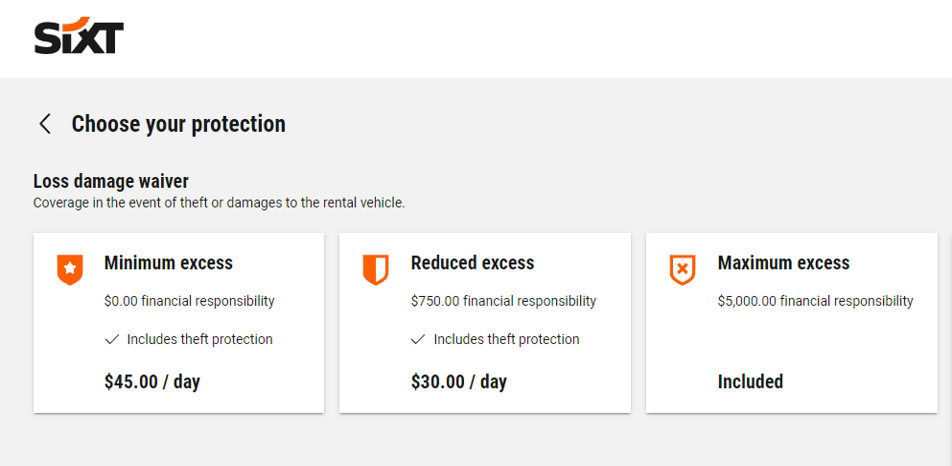
Sixt Rental Car Insurance in New Zealand
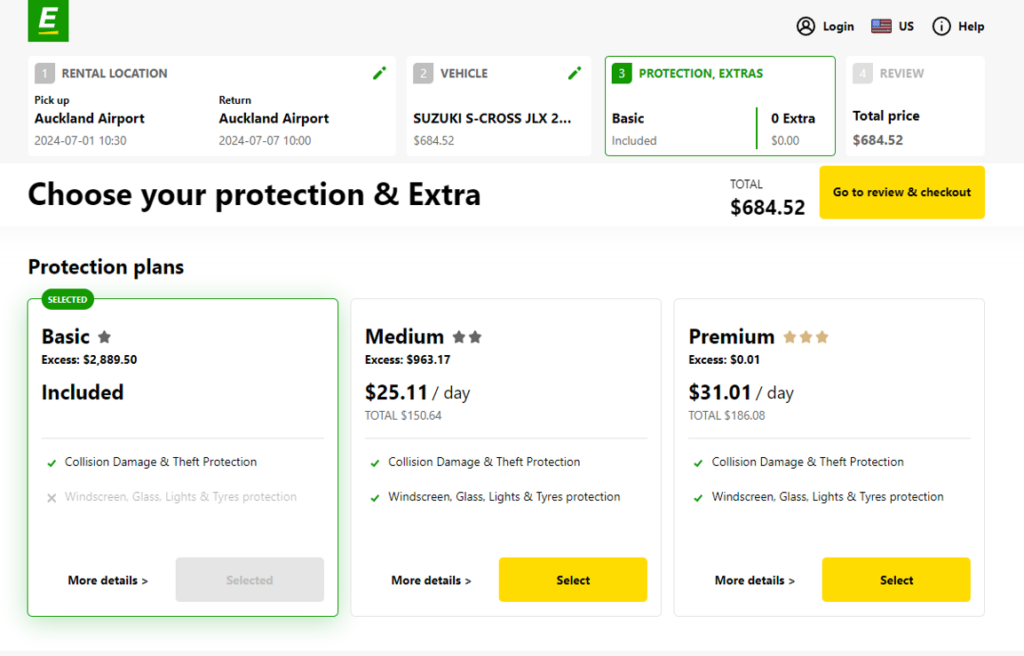
Europcar Rental Car Insurance in New Zealand
CarInsuRent car hire excess insurance starts from as low as US$6.49 per day to US$94.90 for an annual car hire excess insurance policy.
See How Much You Can Save on Your Rental Car Insurance NZ
Get StartedWhen It’s Not Your Fault
In New Zealand, even if you’re not at fault in a collision with another vehicle, rental companies often deduct your full excess. They might not refund this money until the end of a lengthy investigation, which can take several months. To avoid being out of pocket, CarInsuRent protection steps in on your behalf, ensuring you’re treated fairly.
Roadside Assistance Cover (RAC)
Roadside assistance can be a lifesaver during your journey, covering costs like towing, fuel, and key lockout. Rental companies offer Roadside Assistance Cover (RAC) at the rental counter, but it comes at a price.
- RAC costs between NZ$14.69 and NZ$22.04 per day.
- However, it’s essential to note that RAC doesn’t cover key replacement, and towing expenses might be capped.
CarInsuRent’s car hire excess protection for rental cars offers the same coverage at a 70% lower cost!
Personal Accident Insurance (PAI)
While on the road, your safety is paramount. Personal Accident Insurance (PAI) compensates you for personal injuries, including those of your passengers. Rental companies offer PAI at the counter, typically priced between NZ$14.69 and NZ$22.04.
However, it’s worth checking if your credit card or other travel insurance policies already provide similar coverage, potentially saving you from purchasing duplicate insurance.
Car Rental Insurance for New Zealand – Your Options
Purchase Car Rental Insurance Directly With the Rental Company
- Rental company’s insurance – Most rental car companies offer their own insurance, which typically includes damage cover (CDW), theft cover (Theft Protection), and third-party cover (Third-Party Liability). These types of insurance options usually come with an excess, which is the first part of the bill that the renter will be responsible for. The rental company’s insurance is convenient, but it can be expensive and may not provide comprehensive coverage.
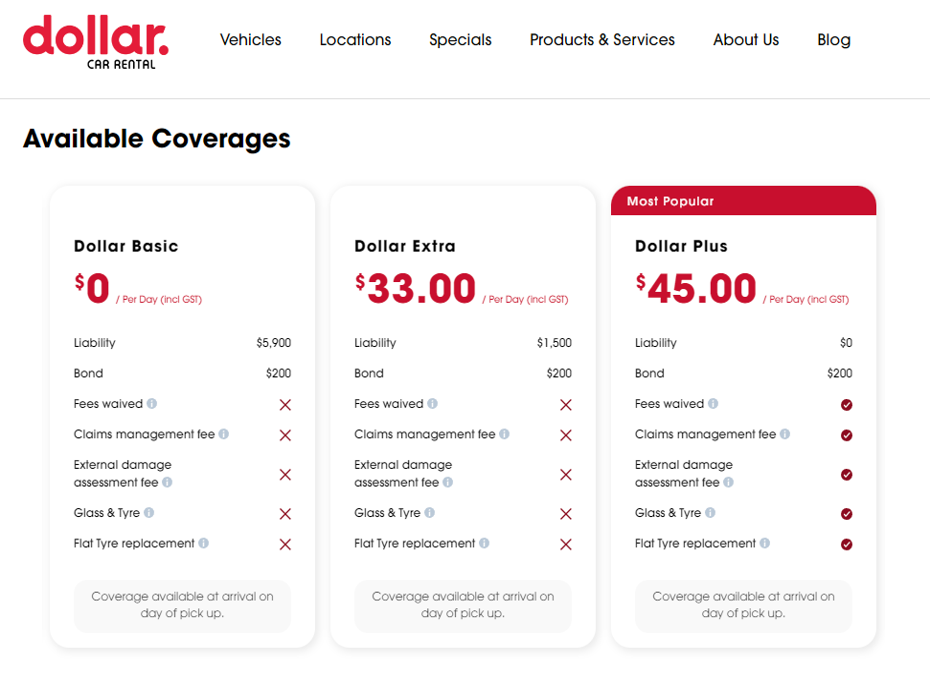
Dollar Rental Car Insurance in New Zealand
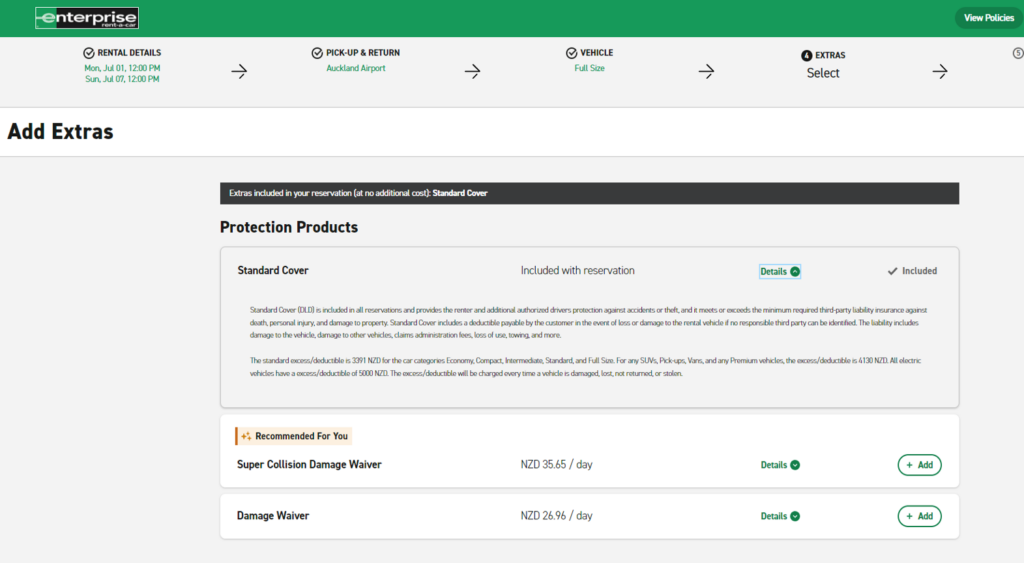
Enterprise Rental Car Insurance in New Zealand
Cover Your Excess Through CarInsuRent
- Third-party car rental insurance – Third-party car rental insurance is an affordable option that can provide comprehensive coverage for rental cars. This type of insurance typically covers collision damage, theft protection, and liability, and may offer higher coverage limits than rental company insurance. It can provide a cost-effective alternative to rental car company insurance.
Personal auto insurance policies
- Personal auto insurance policies may cover rental cars, but it depends on the policy and the coverage. If the policy includes collision and comprehensive coverage, it may extend to rental cars. However, liability coverage may not extend to rental cars, so it’s important to check with the insurance company before renting a car.
Travel insurance –
- Travel insurance may offer coverage for rental cars, including collision damage and theft protection. However, it is important to check the policy to confirm the coverage and any limitations or exclusions.
Credit card rental car insurance benefits –
- Some credit cards offer rental car insurance benefits, which may include coverage for damage and theft. However, the coverage and limitations can vary by credit card, so it’s important to check with the credit card company to confirm the coverage. Check if your personal insurance or credit card covers rental car insurance.
Don’t Buy Any Additional Insurance At All
- You are not required by law to buy a New Zealand cr hire excess insurance or a Collision Damage Waiver. Such products are completely optional. In case of an accident (whether major or minor), rental companies would quickly bill your credit card the maximum damage. Excess fee can reach NZ$ 2,900–$ 6,900 depending on the company and the type of car you rented.
See How Much You Can Save on Your Rental Car Insurance NZ
Get StartedBenefits of Having CarIsnuRent Car Rental Insurance for New Zealand
Here are some key benefits of having CarIsnuRent car rental insurance for New Zealand:
- It’s at least 70% cheaper than rental company excess waivers.
- There’s a $0 excess in the event of an accident or damage.
- It can be canceled until pickup.
- All drivers between the ages of 21 and 84 years that are listed on the rental agreement are covered.
- Benefits include free cover for roadside assistance, towing (saving you NZ$7.35 to NZ$14.69 per day), and key loss.
- It covers accident-related fees.
- Damage-related charges and administration costs are reimbursed upon claim approval.
- It covers types of damage excluded by rental companies, including single vehicle damage, roof and undercarriage damage, auto glass and widescreen damage, towing expenses, misfuelling, loss of car key and tire damage.
Remember that when choosing CarInsuRent protection, you should already have the most basic collision damage waiver (CDW, LDW, or similar) offered by the car rental company or your booking agent, which is usually included with the rental vehicle in New Zealand.
Here’s How CarInsuRent Car Hire Excess Insurance saved Our Client a Significant Amount of Money
Mr .Viktor, a customer from Belgium, rented a Volvo XC40 for 4 days at Charles de Gaulle airport. Despite declining the rental company’s insurance coverage due to its high cost, Viktor decided to purchase standalone car hire excess insurance from CarInsuRent after reading about its benefits.
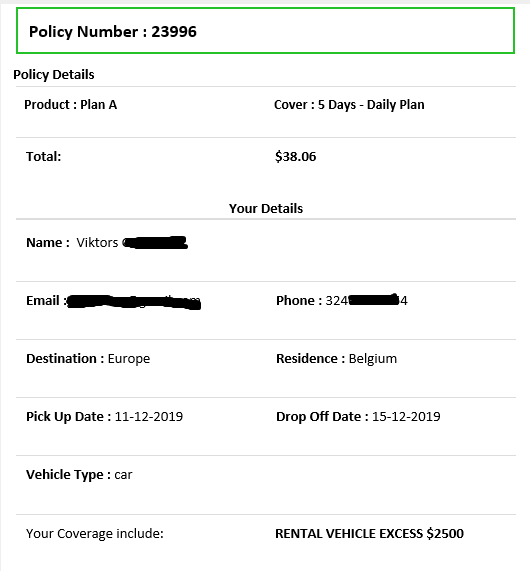
Copy of Viktor Car Hire Excess Policy
While driving in Beauvais late at night to his hotel, he approached a narrow street. The street was bounded by stone wall on the right hand side. Being a little bit tired, he focused his attention on the vehicle coming in front, coming too close to the wall. Viktor scratched the doors and rear fender of the rental car because of the collision.
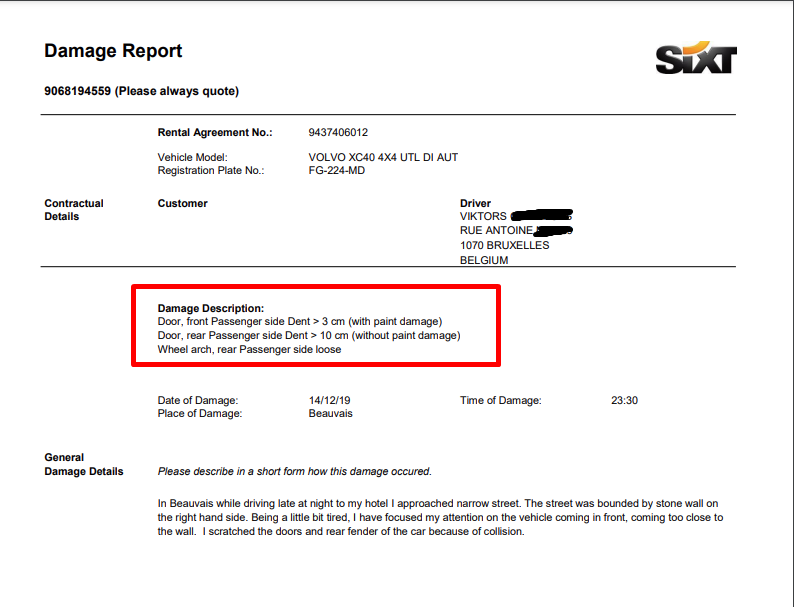
Sixt Damage Report
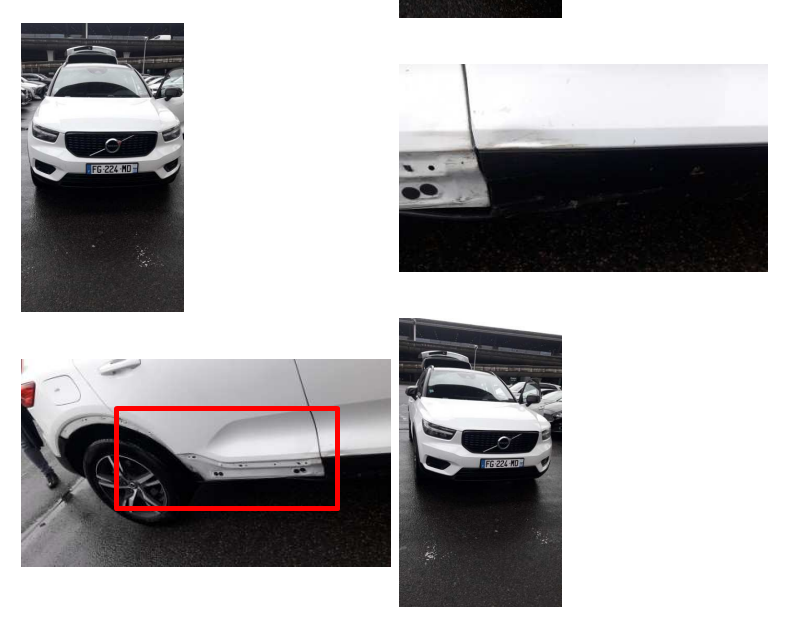
Images of Viktor Damage to Sixt Rental car
Unfortunately, Sixt charged Mr. Viktor EUR 1,760 + VAT for the damage.
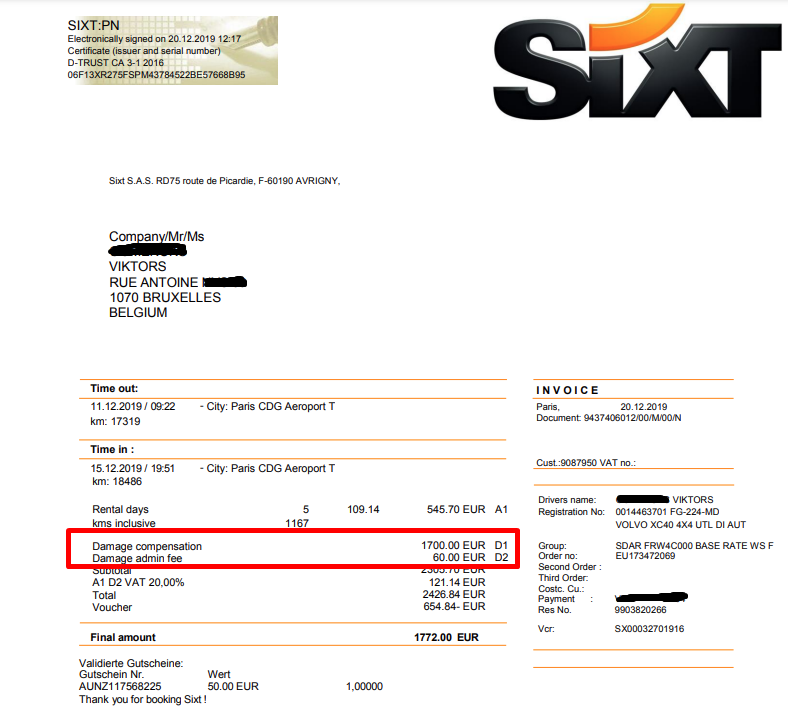
Sixt Repair Cost
However, Viktor had purchased car hire excess insurance, which covered the excess amount he would have to pay in such situations. As a result, he was able to file a claim with CarInsuRent, and we reimbursed him for the repair costs incurred by the rental company. This saved Viktor thousands of Euros, as he only had to pay US$ 38.06 for the car hire excess coverage instead of the full repair bill.
In Case of an Accident
What to Do in Case of an Accident or Damage – If you are involved in an accident while driving a rental car, there are certain steps you should follow to file a claim with the rental car insurance company. First, exchange personal information with the other driver, including name, address, license plate number, rental vehicle information, insurance company, and policy number, and document the accident with pictures and notes. If the other driver is at fault, you should get their contact and insurance information and call their insurance company directly to file a claim. If you are at fault or have non-collision damage, you can file a claim with the rental car insurance company. The process for filing a claim with the rental car insurance company may vary depending on the provider, but typically, you would need to provide details of the incident, including the date, time, and location of the accident, as well as any police report numbers, if applicable. Additionally, you may need to provide documentation of the damage, such as photographs or repair estimates.
Required Documentation for Filing a Claim
- A copy of the Certificate of Insurance
- A copy of the rental agreement
- A copy of the police report if:
- you got in an accident with a third party
- It is legally mandated in the country of incident
- your claim is about stolen personal belongings
- A copy of the damage report given by the rental company, detailing each cost incurred. Photographs of the damage are optional but may help ensure that the charges are reasonable.
- Detailed repair receipts, invoices or other documents showing the breakdown of the amount the rental company charged you for the accidental damage or loss
- A copy of your credit card statement that reflects your payment for the claimed damages
- A copy of the driver’s license of the person driving the car during the accident
Tips for a Smooth Claims Process: Filing an insurance claim can be a complicated and stressful process. The following tips can help ensure a smoother claims process:
- Document everything: Documenting all the details of the accident or loss, including taking photos and notes, can help speed up the claims process and reduce the possibility of disputes.
- Communication: Communication is key in any insurance claim process. Keep thorough records of all communication with the insurer, and discuss your expectations for the claims process with the adjuster. You can also ask about the frequency of updates and the preferred type of communication.
- Avoid duplicate claims: Avoid submitting duplicate claims, as it slows down the claims payment process and creates confusion.
- Understand your coverage: It’s important to understand your insurance coverage, including the limits and deductibles, before filing a claim. Understanding your policy can help ensure that you receive the maximum benefit to which you are entitled.
- Be patient: Claims processing can take time, so it’s important to be patient.
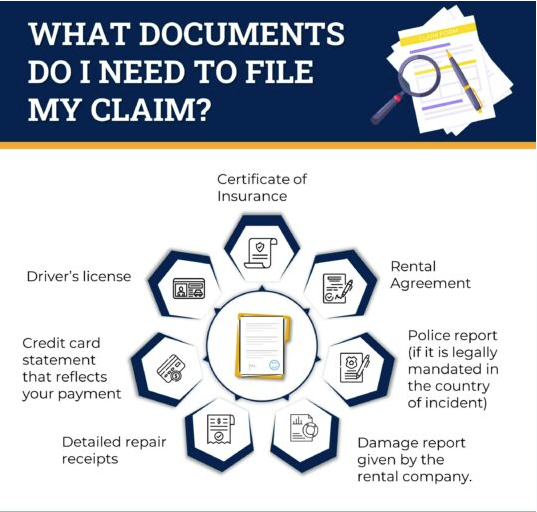
What Documents Do I Need to File My Claim?
By following these tips, you can help ensure a smoother claims process, and increase the chances of receiving the maximum benefit that you are entitled to under your insurance policy.
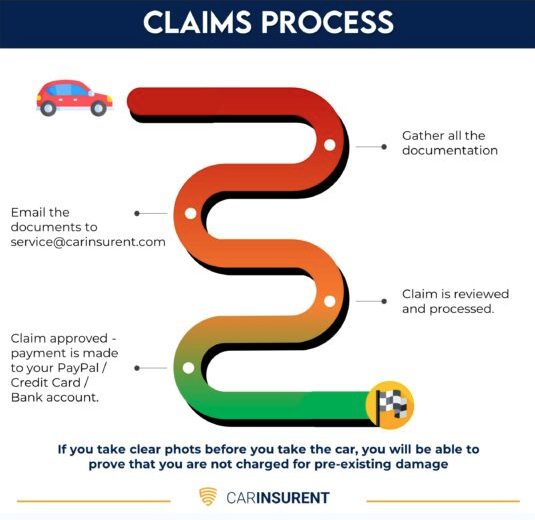
Claims Process
Coverage for a Replacement Vehicle
If your rental company provides you with a new vehicle during your rental period, your CaInsuRent policy will also cover the new vehicle as long as it’s a like-for-like exchange. You don’t need to notify CarInsuRent of the vehicle change.
Motorhome Rental Insurance in New Zealand
Renting a motorhome in New Zealand offers an incredible opportunity to embark on a memorable and immersive adventure. With its breathtaking landscapes, charming towns, and diverse outdoor activities, New Zealand is a paradise for road trip enthusiasts. Renting a motorhome allows you to have the freedom and flexibility to explore the country at your own pace, creating an itinerary that suits your preferences. From the stunning fjords of Milford Sound to the geothermal wonders of Rotorua, and the majestic peaks of the Southern Alps, a motorhome provides a comfortable and convenient base for experiencing the natural beauty and cultural richness of New Zealand. With well-maintained roads, numerous holiday parks, and a welcoming camping culture, renting a motorhome in New Zealand opens up a world of possibilities for discovering hidden gems, enjoying outdoor activities, and connecting with nature. Whether you’re a nature lover, adventure seeker, or simply looking to immerse yourself in the unique Kiwi way of life, renting a motorhome in New Zealand is an ideal choice for an unforgettable journey. If you plan to explore New Zealand with a rented motorhome, we encourage you to read our Ultimate Guide to Motorhome Hire Insurance and recognize the importance of motorhome rental insurance to safeguard your travel investment.
In conclusion, renting a car in New Zealand is an excellent way to explore this beautiful country. However, understanding car rental insurance options is crucial to protect yourself from unexpected expenses. CarInsuRent protection offers comprehensive coverage at a lower cost, ensuring you have peace of mind while enjoying your New Zealandian adventure. Remember to document your vehicle’s condition, say ‘no’ to duplicate coverage, and follow the necessary steps in case of an accident. Safe travels!
See How Much You Can Save on Your Rental Car Insurance NZ
Get StartedTop Tips for a Smooth Rental Experience
- Pre-Pay and Save – Consider purchasing rental car insurance from reputable online travel agencies like CarInsuRent.com. This can save you up to 70% compared to buying insurance directly from the rental companies.
- Document Vehicle Condition – Take photos and videos of the rental vehicle both at pickup and drop-off. These records can be invaluable when making claims or disputing unfair charges from the rental company.
- Say ‘No’ to Duplicate Coverage – If you’ve opted for CarInsuRent protection, you don’t need roadside assistance from the rental company. However, you must still have a basic collision damage waiver offered by the car rental company
FAQ
Is CDW mandatory in New Zealand?
Yes, Collision Damage Waiver (CDW) is typically mandatory when renting a car in New Zealand. CDW is a form of insurance that protects the renter from financial responsibility for damages to the rental vehicle in the event of a collision or accident. Rental car companies in New Zealand often require renters to purchase CDW as part of the rental agreement. It is important to carefully review the terms and conditions of the rental agreement to understand the specific requirements and coverage provided.
Travel Tips and Guides
Frequently Asked Questions (FAQ)
Can I buy a plan for just one day?
Can I buy a plan for part of my rental only?
No. We provide a single journey plan. You are covered from the time you pick up the rental car up to the time you return it or on the last date written on your Certificate of Insurance, whichever comes first.
Can I buy a plan when I pick up my rental car?
No. You should purchase a policy before starting your travel.
Find the answers you’re looking for to the most frequently asked car hire insurance questions as well as other questions relating to our products and services.
